Can Heavy Rain Affect Your Septic System in Ohio?
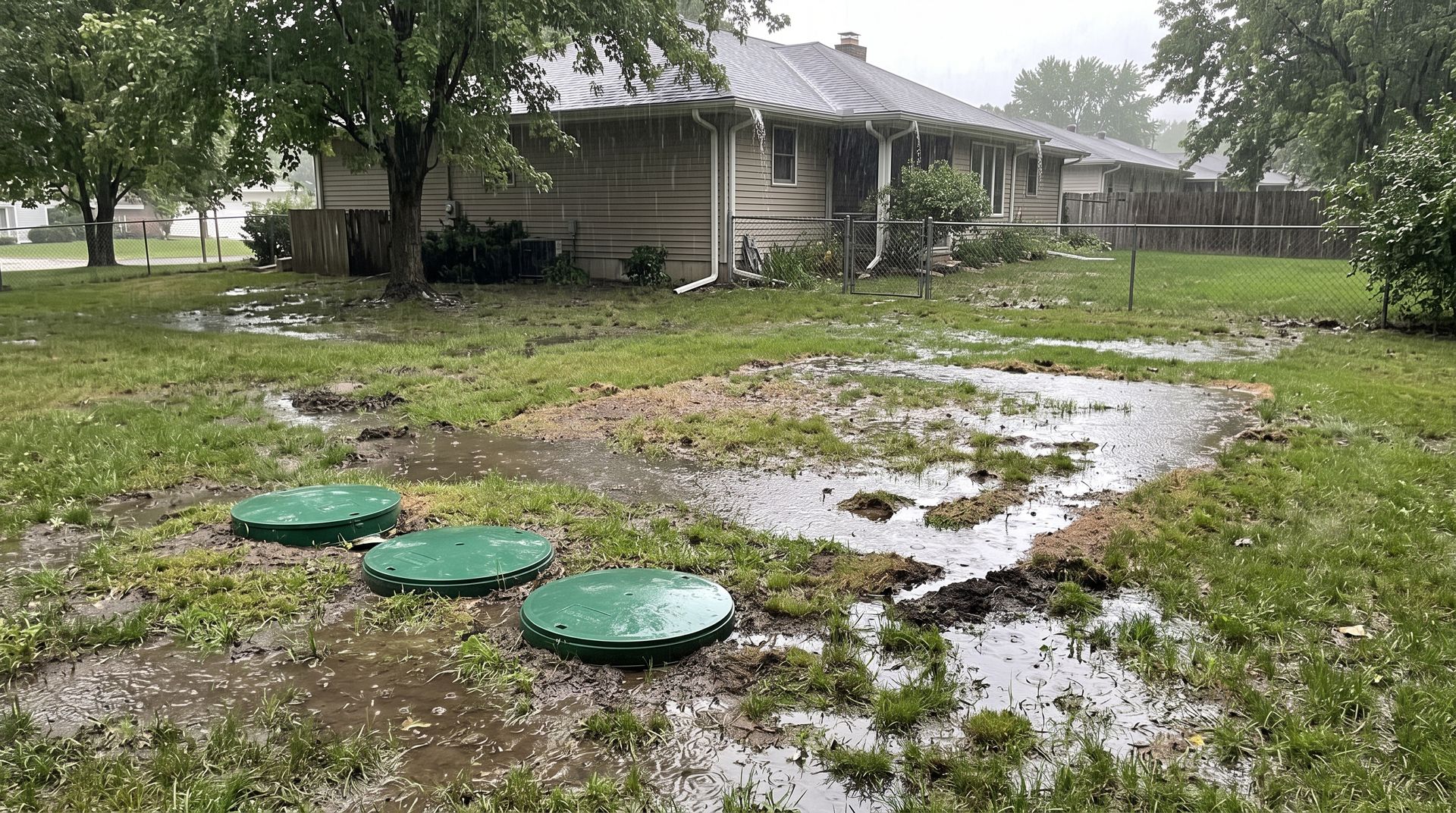
Yes, heavy rain can affect a septic system, especially when prolonged rainfall saturates the soil around the drain field. When the ground holds more water than usual, wastewater may have difficulty moving through the soil at its normal rate. Homeowners may notice slower drains, temporary pooling near the drain field, or other changes in system performance.
For homeowners in Sunbury and Central Ohio, the key is knowing what is normal after a storm and what could indicate a septic problem that needs professional attention.
Why Does Heavy Rain Affect a Septic System?
A septic system relies on both the tank and the surrounding soil. Wastewater flows from the home into the septic tank, where solids settle before liquid moves toward the drain field.
The drain field then distributes wastewater into the soil for further treatment. That process works best when the soil has enough capacity to receive water.
During periods of prolonged or intense rain, the ground can become saturated. When much of the available space in the soil already contains rainwater, wastewater from the septic system may move through the drain field more slowly.
This does not automatically mean the septic system has failed. Conditions may improve as the soil dries. Persistent symptoms, however, should not be dismissed as normal storm-related effects.
What Septic Problems Can Appear After Heavy Rain?
Rain affects properties differently depending on soil conditions, grading, drainage, and the location of the septic system. Some changes are more important to watch than others.
Slow Drains Inside the Home
Sinks, showers, tubs, or toilets may drain more slowly when saturated conditions limit how efficiently wastewater can move through the septic system.
One slow fixture could be a plumbing issue. If several drains become sluggish at the same time after extended rainfall, the septic system may be experiencing additional stress.
Standing Water Near the Drain Field
Puddles after a storm are common, particularly in low areas. What matters is where the water collects and how long it remains.
Standing water directly over or around the drain field deserves attention when surrounding parts of the yard begin drying but the septic area remains unusually wet.
Avoid walking unnecessarily through the area or driving equipment across saturated soil.
Sewage Odors
Persistent sewage odors near the tank, drain field, or inside the home should not be considered a routine result of rainfall.
If odors appear during wet weather and continue, professional septic system installation and repairs can help determine whether saturated soil has exposed an existing system issue or whether another septic component needs attention.
What Should You Do After Heavy Rain?
If your property is saturated, reducing unnecessary water use can temporarily decrease the amount of wastewater entering the septic system.
Simple steps include:
- Space out loads of laundry
- Avoid running several water-heavy appliances together
- Keep showers reasonable
- Repair leaking faucets or toilets
- Postpone unnecessary high-water activities
The goal is not to stop using your plumbing. It is to avoid adding more water than necessary while the surrounding soil is already holding significant moisture.
Keep Vehicles Off the Drain Field
Do not drive cars, trucks, tractors, trailers, or heavy equipment across a wet drain field.
Saturated soil is more vulnerable to compaction. Added weight can reduce the soil's ability to manage water and may also place pressure on underground septic components.
Wait for the ground to stabilize before allowing heavy equipment near the area.
Can Property Drainage Make the Problem Worse?
Yes. Septic performance during wet weather is not only about the rain falling directly over the drain field. Water arriving from other parts of the property can also contribute to saturation.
Downspouts, slopes, driveway runoff, and poorly directed drainage can send additional stormwater toward the septic area.
Watch Where Stormwater Travels
After a substantial rain, observe how water moves across your property. Look for runoff flowing toward the drain field, erosion channels, low areas that collect water, or downspouts discharging nearby.
Do not attempt to solve the problem by simply moving soil around the drain field. Changing the grade without understanding the overall drainage pattern can redirect water somewhere else and create a new issue.
For properties where runoff or grading contributes to wet conditions, professional driveway and drainage services can help address how surface water moves across the site.
How Can You Protect Your Septic System During Wet Weather?
The best approach is to protect the drain field before severe saturation becomes a recurring concern.
Know where the septic tank and drain field are located. Keep structures, vehicles, and heavy equipment away from the drain field, and avoid planting large trees directly over septic components.
Pay attention to changes in grading when completing other property improvements. A new driveway, building, landscaping project, or excavation work can alter how stormwater moves across the site.
Do Not Pump a Tank Just Because the Ground Is Wet
Wet weather alone is not a reason to assume the tank needs immediate pumping. Septic symptoms can have several causes, and saturated ground may complicate work around the system.
If the system is showing signs of trouble, have the conditions evaluated rather than guessing at the solution.
When Should You Call a Septic Professional?
Some temporary changes may improve as the property dries. Professional attention becomes more important when symptoms persist or become more severe.
Call for an evaluation if you notice recurring sewage odors, wastewater backing up into the home, unusually wet conditions over the drain field after surrounding soil has dried, or multiple drains that remain slow.
A professional can evaluate the broader septic and site conditions instead of treating rainfall as the only possible cause.
FAQs About Heavy Rain and Septic Systems
Can heavy rain cause a septic backup?
Saturated soil can make it harder for a drain field to accept wastewater. If the system cannot move wastewater normally, plumbing performance may be affected and backups can occur.
Should I use less water after heavy rain?
Reducing unnecessary water use can lower the demand placed on a septic system while surrounding soil is saturated.
How long should a drain field stay wet after rain?
There is no single timeframe because soil, rainfall, grading, and drainage vary by property. A septic area that remains unusually wet after surrounding ground dries should be evaluated.
Can driveway runoff affect a septic system?
Yes. If grading directs driveway runoff toward the drain field, it can add unnecessary surface water to the area and contribute to saturated conditions.
Get Help With Rain-Related Septic Problems
If heavy rain is affecting your septic system in Sunbury or Central Ohio, contact Risha Enterprises for professional septic service.