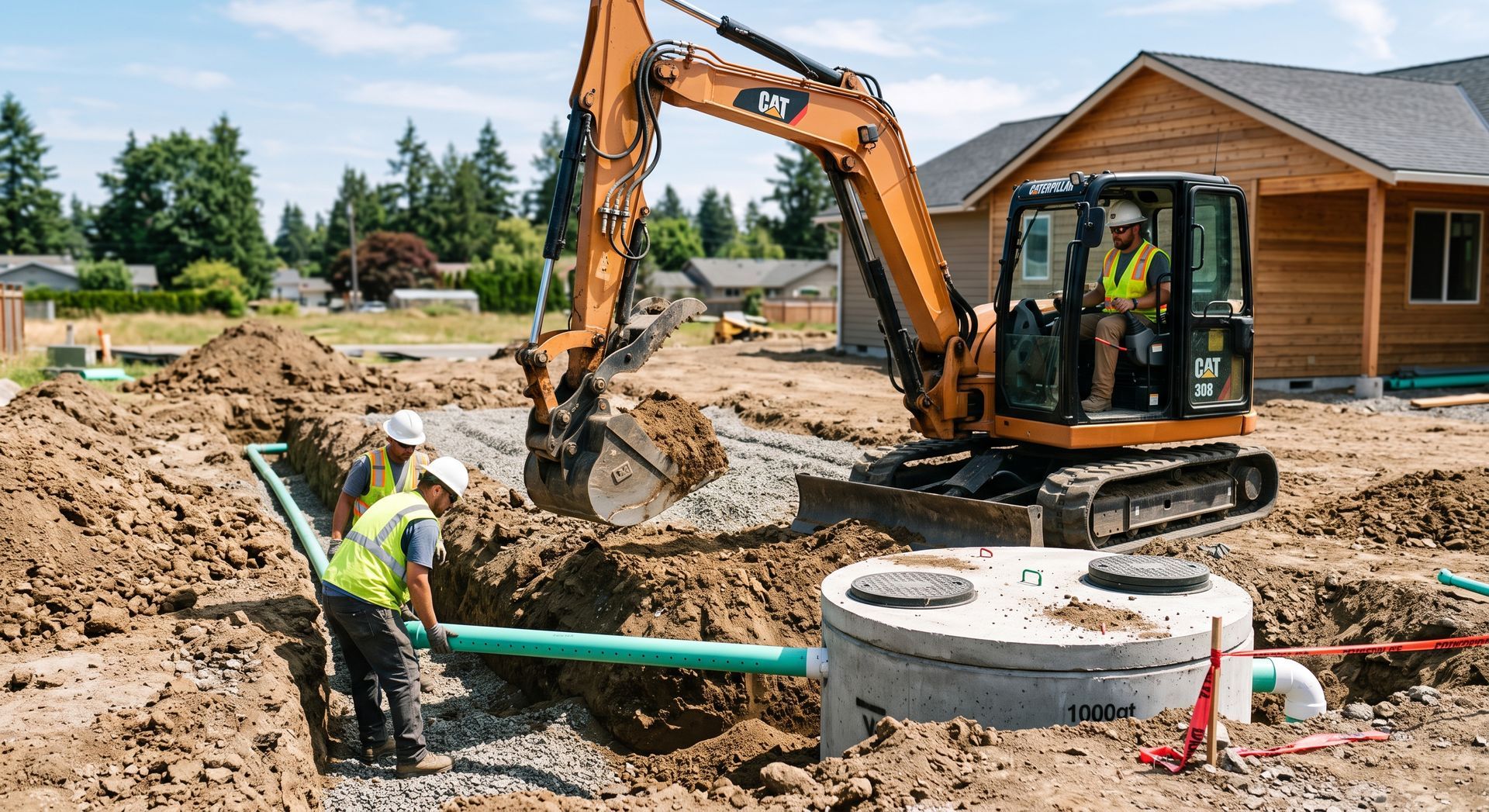
Septic Drain Field Problems Ohio Homeowners Should Know
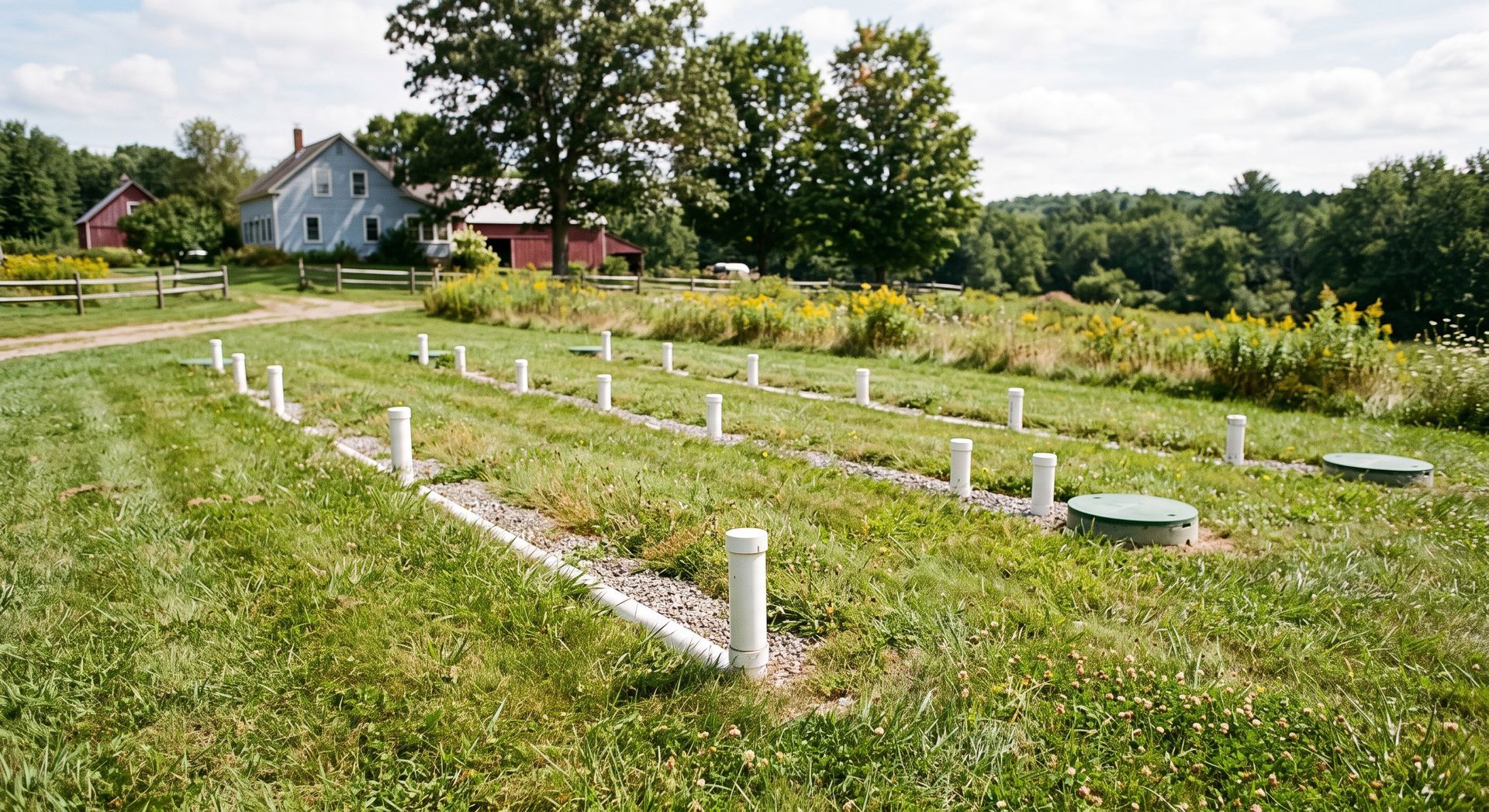
Septic drain field problems can affect how wastewater moves through the entire septic system. Slow drains throughout the home, sewage odors, persistently wet ground, or unusual grass growth near the drain field may indicate that wastewater is not moving through the soil as it should.
For homeowners in Sunbury and Central Ohio, these symptoms are worth investigating rather than ignoring. Drain field trouble can develop from saturated or compacted soil, excess wastewater, surface runoff, roots, or physical damage. Understanding the cause is the first step toward determining what the system actually needs.
What Causes Septic Drain Field Problems?
After wastewater passes through the septic tank, it enters the drain field for further treatment in the soil. The surrounding soil must be able to receive and filter that wastewater effectively.
When conditions interfere with this process, the drain field may struggle to function normally.
Saturated Soil and Excess Water
A drain field needs soil that can absorb wastewater. When the ground is already saturated from prolonged rainfall or surface runoff, its ability to accept additional water may be temporarily reduced.
Watch how the property responds after rain. If the septic area remains noticeably wetter than surrounding ground long after other areas have dried, further evaluation may be appropriate.
Soil Compaction
Driving vehicles, trailers, or heavy equipment over a drain field can compact the soil. Compaction reduces the pore space that allows water and air to move through the ground.
Heavy loads may also damage buried septic components. For that reason, the drain field should not be treated as an overflow parking area, equipment route, or storage space.
Too Much Wastewater at Once
A septic system must handle the wastewater generated inside the home. Several high-water activities occurring close together can increase the load entering the system.
Spacing out laundry, fixing leaking fixtures, and avoiding unnecessary water use can help reduce excessive demand. Water conservation is especially useful when the ground is already saturated.
Roots and Property Improvements
Trees and large shrubs planted near septic components can cause problems as their roots spread underground. Construction and landscaping can also create issues when contractors do not know where the system is located.
Before adding a building, driveway, pool, or other improvement, identify the drain field and account for it during site planning.
What Are the Signs of Drain Field Trouble?
Drain field trouble does not always begin with a sewage backup. Smaller changes around the home and yard may appear first.
Multiple Slow Drains
One slow sink may simply have a localized clog. If sinks, showers, tubs, and toilets throughout the home begin draining slowly, however, the issue may extend beyond an individual fixture.
Repeatedly using drain cleaners will not solve a restriction or absorption problem occurring farther into the septic system.
Wet or Spongy Ground
Persistently soggy soil or unexplained standing water over the drain field should be taken seriously, particularly during otherwise dry conditions.
Rain can temporarily saturate any property. The key difference is whether moisture continues around the septic area after nearby ground returns to normal.
Sewage Odors Outdoors
Recurring sewage odors near the tank or drain field may indicate that wastewater is not being contained or treated as intended.
An odor cannot tell you exactly which component is responsible. Professional septic system installation and repairs can help determine whether the concern involves the tank, piping, drain field, or another part of the system.
Unusual Grass Growth
Grass that becomes noticeably greener or grows faster over one portion of the drain field can sometimes indicate additional moisture or nutrients in the soil.
Healthy grass alone does not mean the system is failing. It becomes more concerning when accompanied by wet soil, odors, or slow household drains.
What Should You Do If Problems Appear?
Avoid driving or operating heavy equipment over a suspected problem area. Additional weight can compact already stressed soil and potentially damage underground components.
You can also reduce unnecessary household water use while arranging an evaluation. Spacing out laundry and limiting other high-water activities can temporarily reduce demand on the system.
Do not excavate the drain field yourself. What appears at the surface may not reveal where the actual problem is located.
How Can You Protect Your Drain Field?
Knowing the location of your septic components is one of the best ways to avoid preventable damage. Keep vehicles, trailers, sheds, patios, and other heavy loads away from the drain field.
Avoid planting trees or large shrubs directly over the area, and make sure contractors know where septic components are located before beginning excavation or construction.
Control Surface Runoff
Downspouts, driveway runoff, and grading should not direct unnecessary water toward the drain field. Adding stormwater to already wet soil can make drainage conditions more difficult.
On Sunbury properties where driveway grading or runoff contributes to water problems, professional
driveway and drainage services can help manage water movement around the site.
FAQs About Septic Drain Field Problems
Can heavy rain affect a septic drain field?
Yes. Prolonged rainfall can saturate the soil and temporarily reduce its ability to absorb wastewater. Symptoms that continue after surrounding ground dries should be evaluated.
Can you drive over a septic drain field?
Vehicle and heavy-equipment traffic should be avoided. The added weight can compact soil and may damage underground septic components.
Does green grass mean the drain field is failing?
Not necessarily. Unusual grass growth is more significant when it occurs with other symptoms such as persistent wetness, sewage odors, or slow drains.
Does every drain field problem require replacement?
No. Different conditions can produce similar symptoms. The system should be evaluated before deciding whether repair, drainage improvements, or other work is appropriate.
Get Help With Septic Drain Field Problems
Noticing septic drain field problems in Sunbury or Central Ohio?
Contact Risha Enterprises for professional septic service.