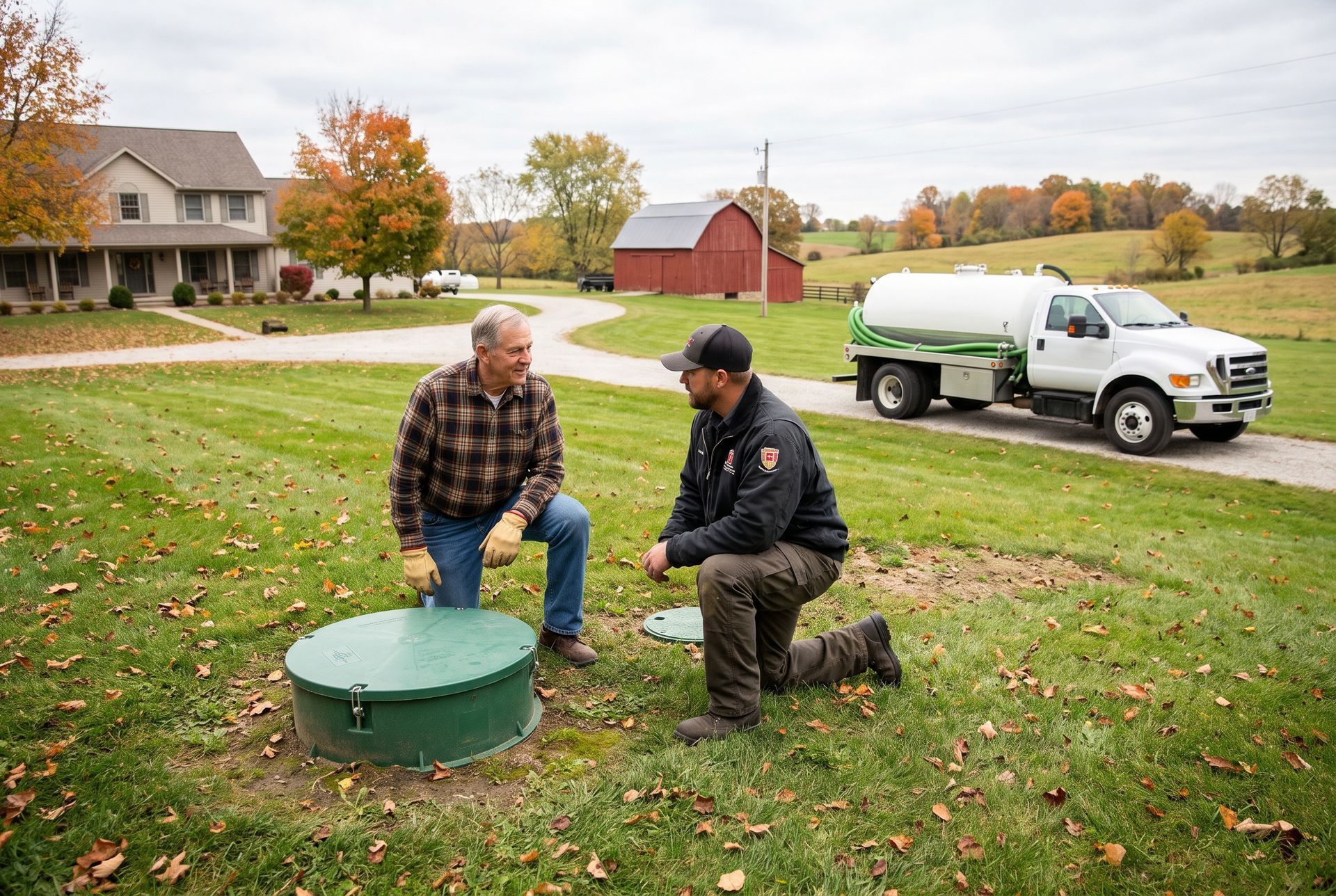
What Causes a Septic Drain Field to Fail?

Septic drain field failure occurs when the field can no longer receive and treat wastewater effectively. Common causes include long-term hydraulic overload, solids reaching the drain field, compacted soil, damaged distribution components, root intrusion, and property changes that interfere with drainage or buried septic components.
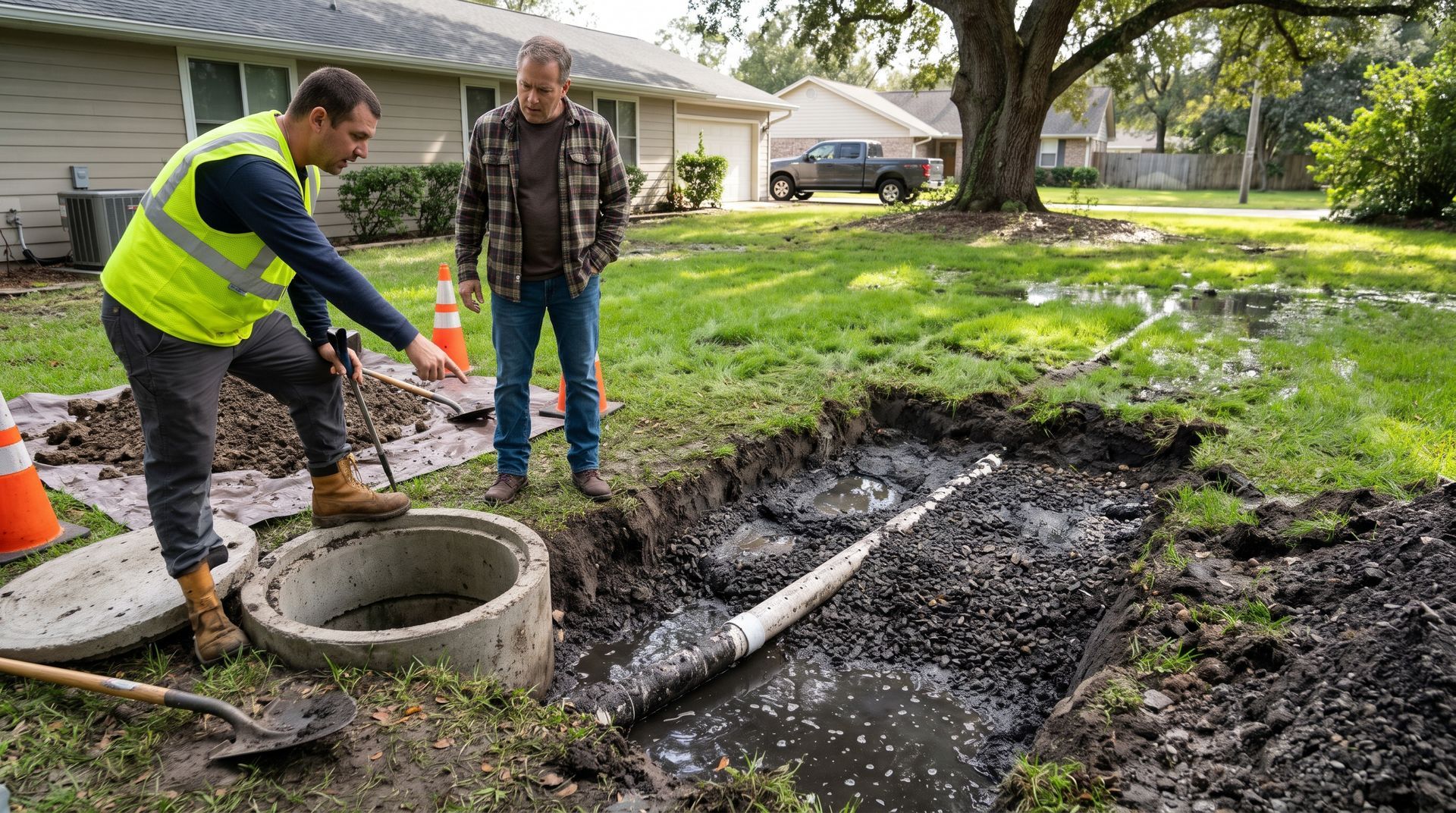
For homeowners in Sunbury and Central Ohio, an important distinction is that a temporarily wet or stressed drain field is not automatically a failed one. Identifying why the system is struggling is necessary before determining whether maintenance, repair, drainage improvements, or more extensive work is appropriate.
What Happens When a Septic Drain Field Fails?
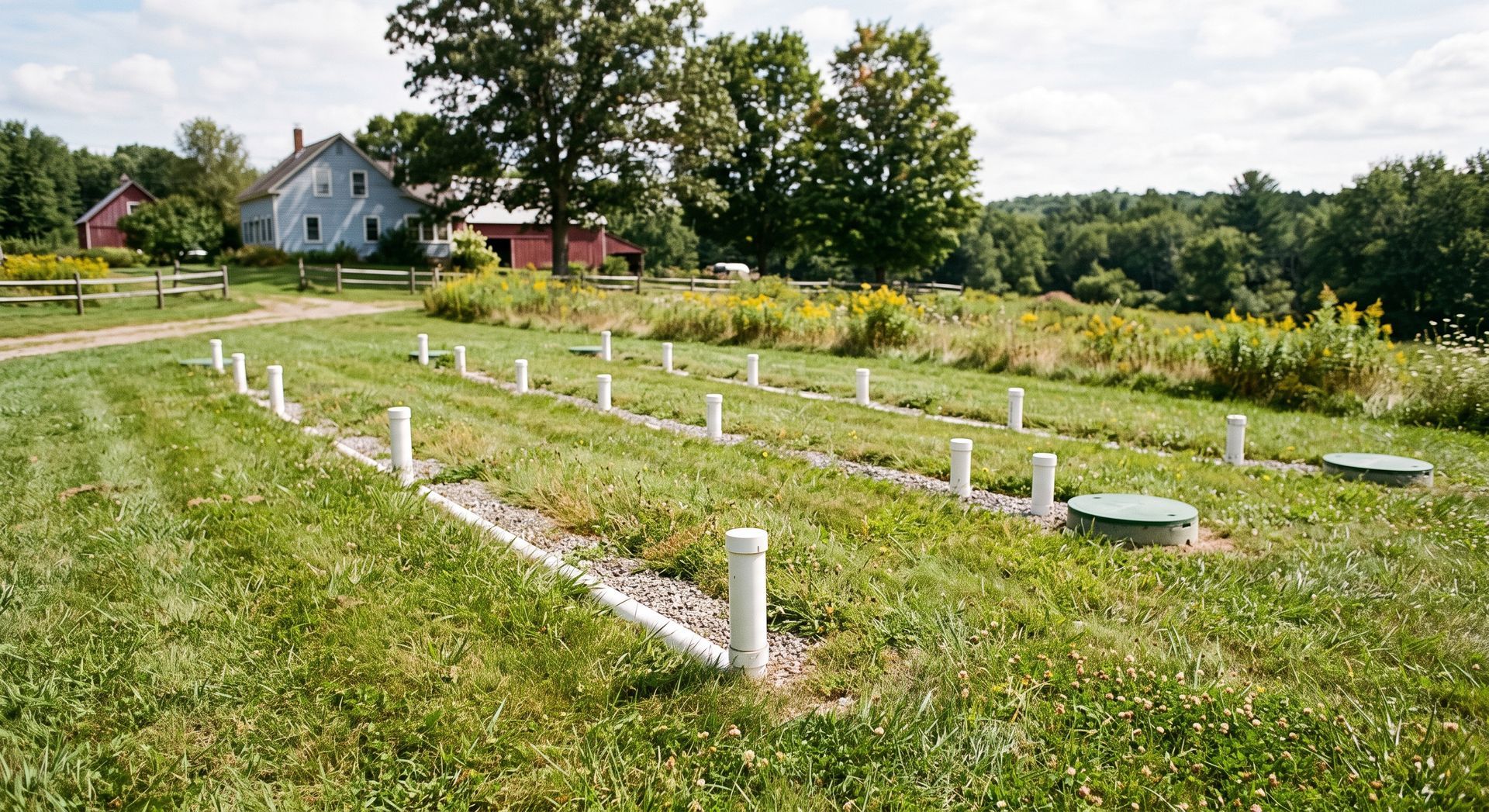
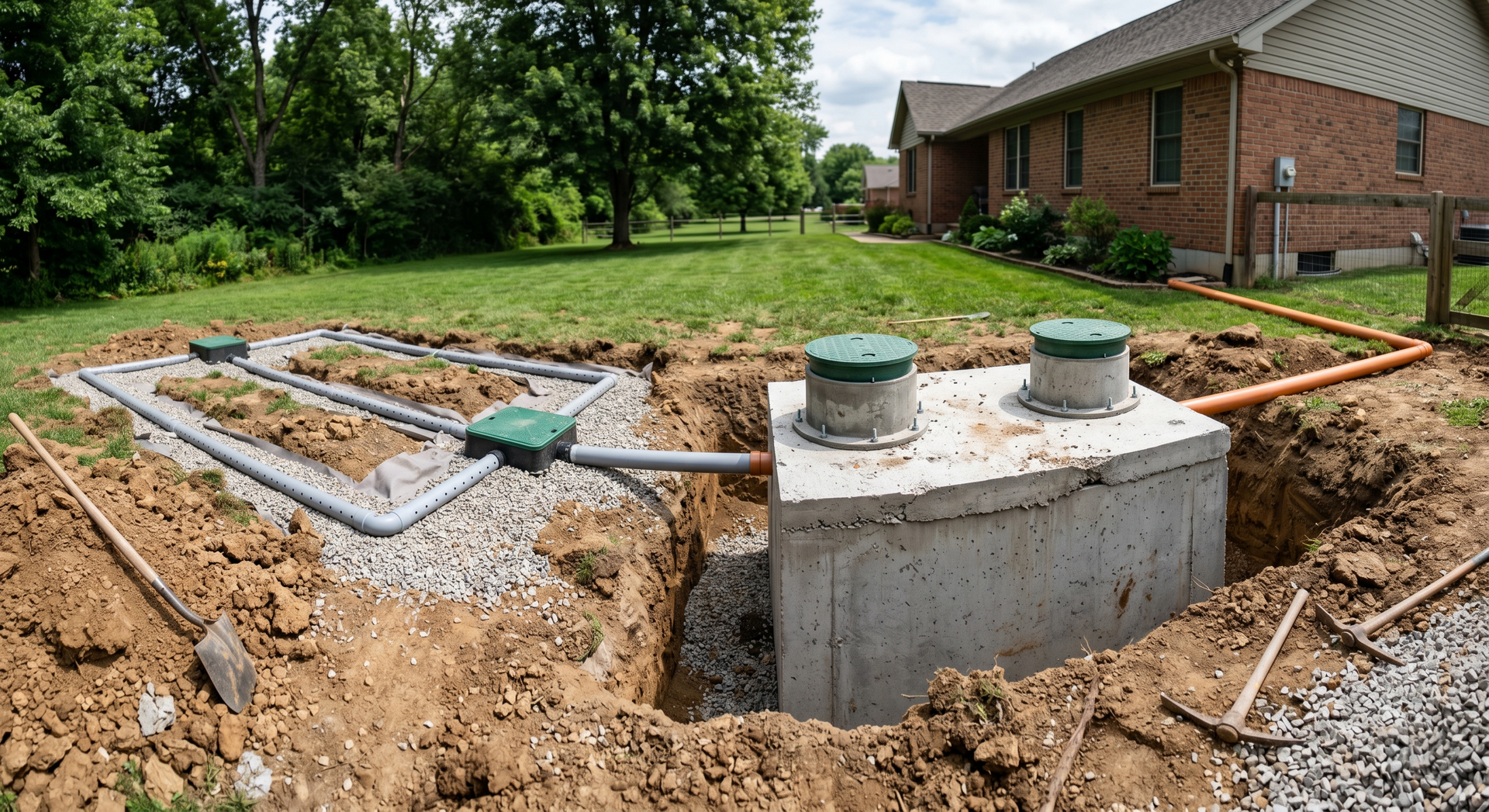
Wastewater first enters the septic tank, where solids separate from liquid. The liquid portion then moves through the system and is distributed into the drain field, where the surrounding soil provides additional treatment.
The drain field depends on both functioning septic components and suitable soil conditions. If wastewater arrives faster than the soil can accept it, solids reach areas where they do not belong, or underground components are damaged, normal treatment can be disrupted.
Drain field failure is therefore not always caused by a single event. Problems can develop gradually as conditions place repeated stress on the system.
What Are the Main Causes of Septic Drain Field Failure?
Understanding the cause matters because similar surface symptoms can result from different underlying conditions.
Long-Term Hydraulic Overloading
Hydraulic overloading occurs when more wastewater enters the septic system than the drain field can effectively manage.
A single day of increased water use does not necessarily cause failure. The greater concern is repeated excessive loading from household habits, leaking fixtures, or other ongoing sources.
A toilet that continuously runs, for example, can send additional water into the system around the clock. Over time, consistently high wastewater volumes may keep the drain field wetter than intended.
Solids Reaching the Drain Field
The septic tank is designed to keep most solids from moving downstream. If excessive solids leave the tank and enter other parts of the system, they can interfere with wastewater distribution and soil absorption.
This is one reason septic problems should be evaluated as a complete system rather than focusing only on the visible wet area outside.
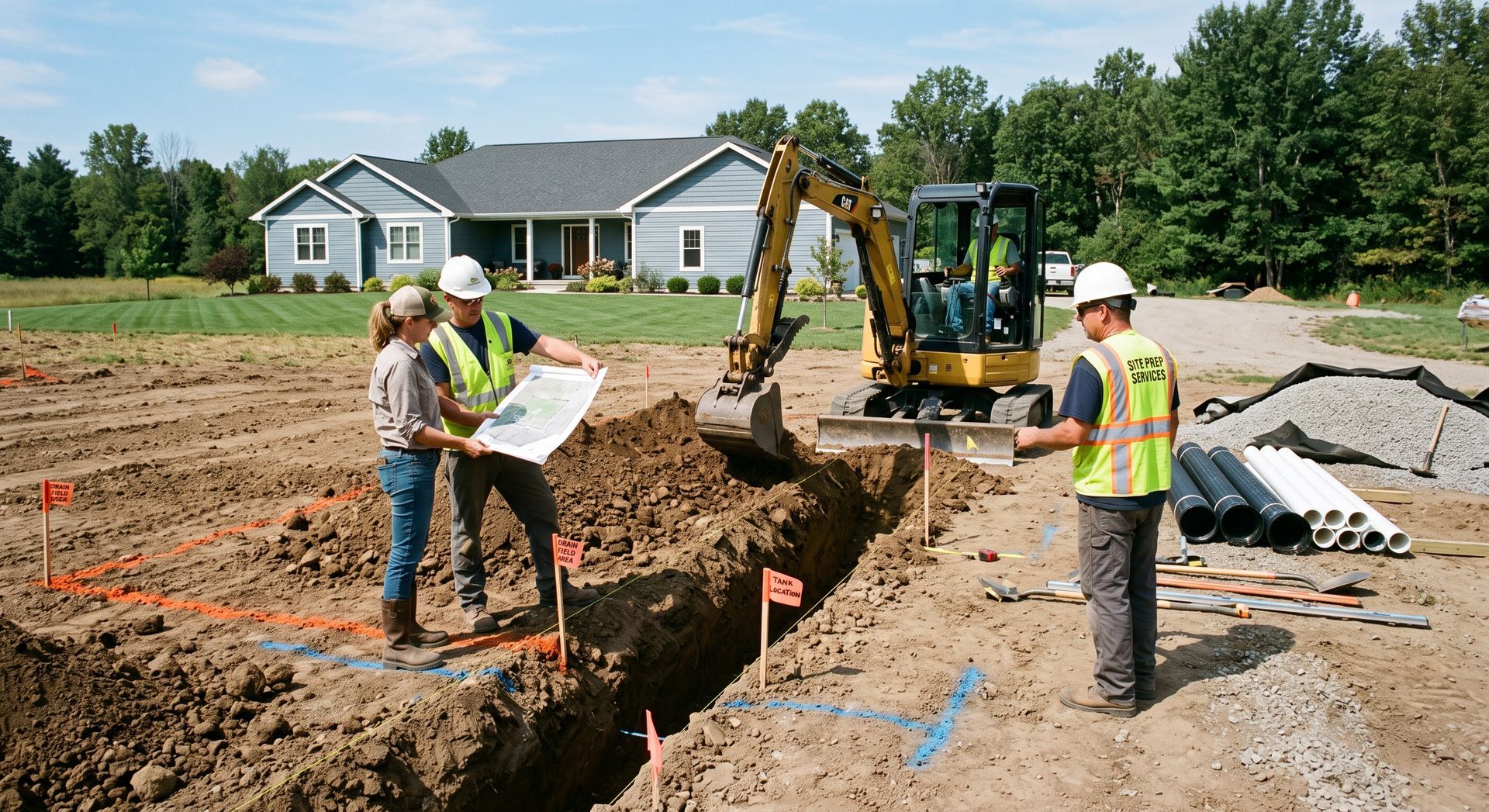
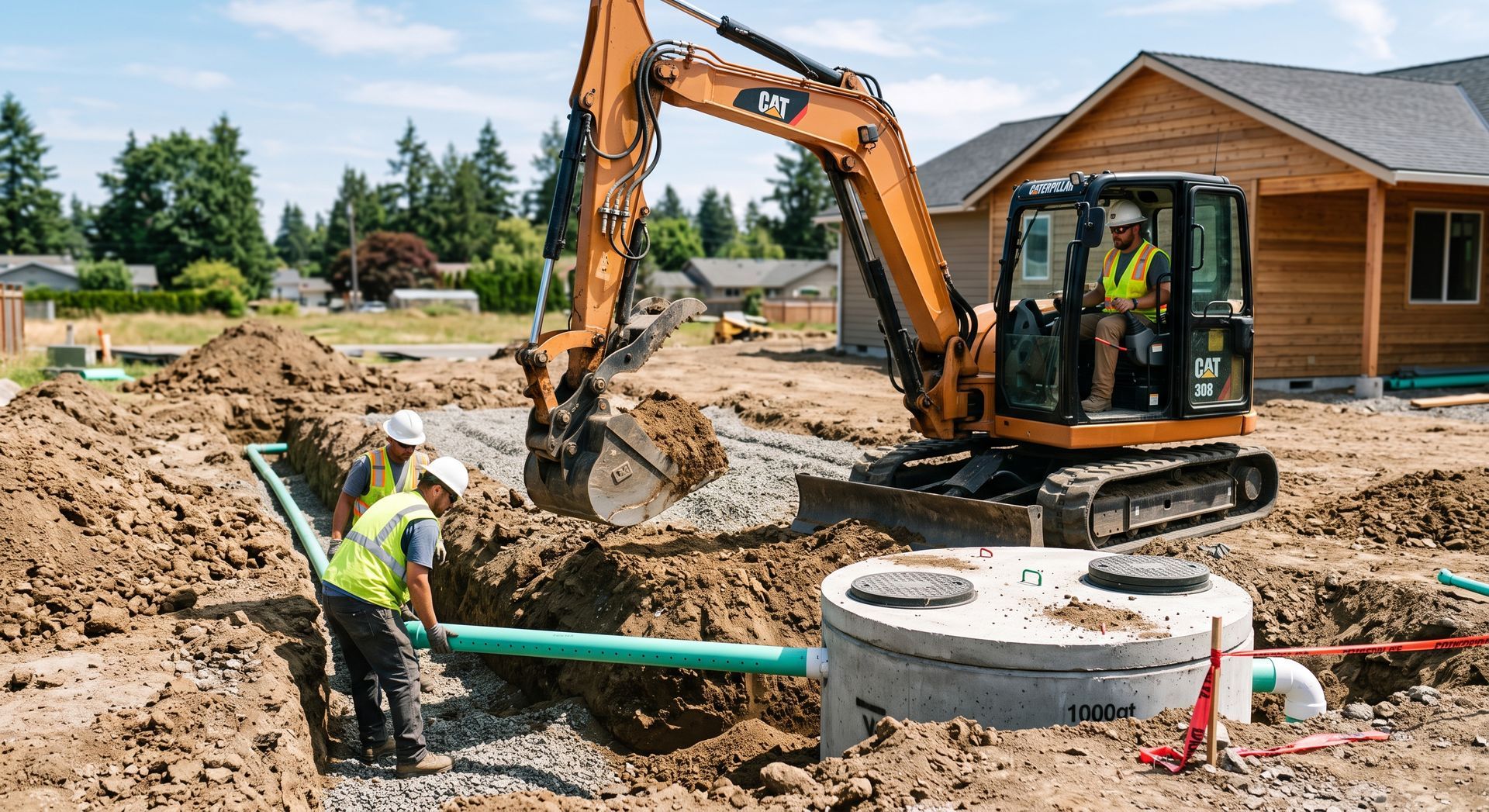
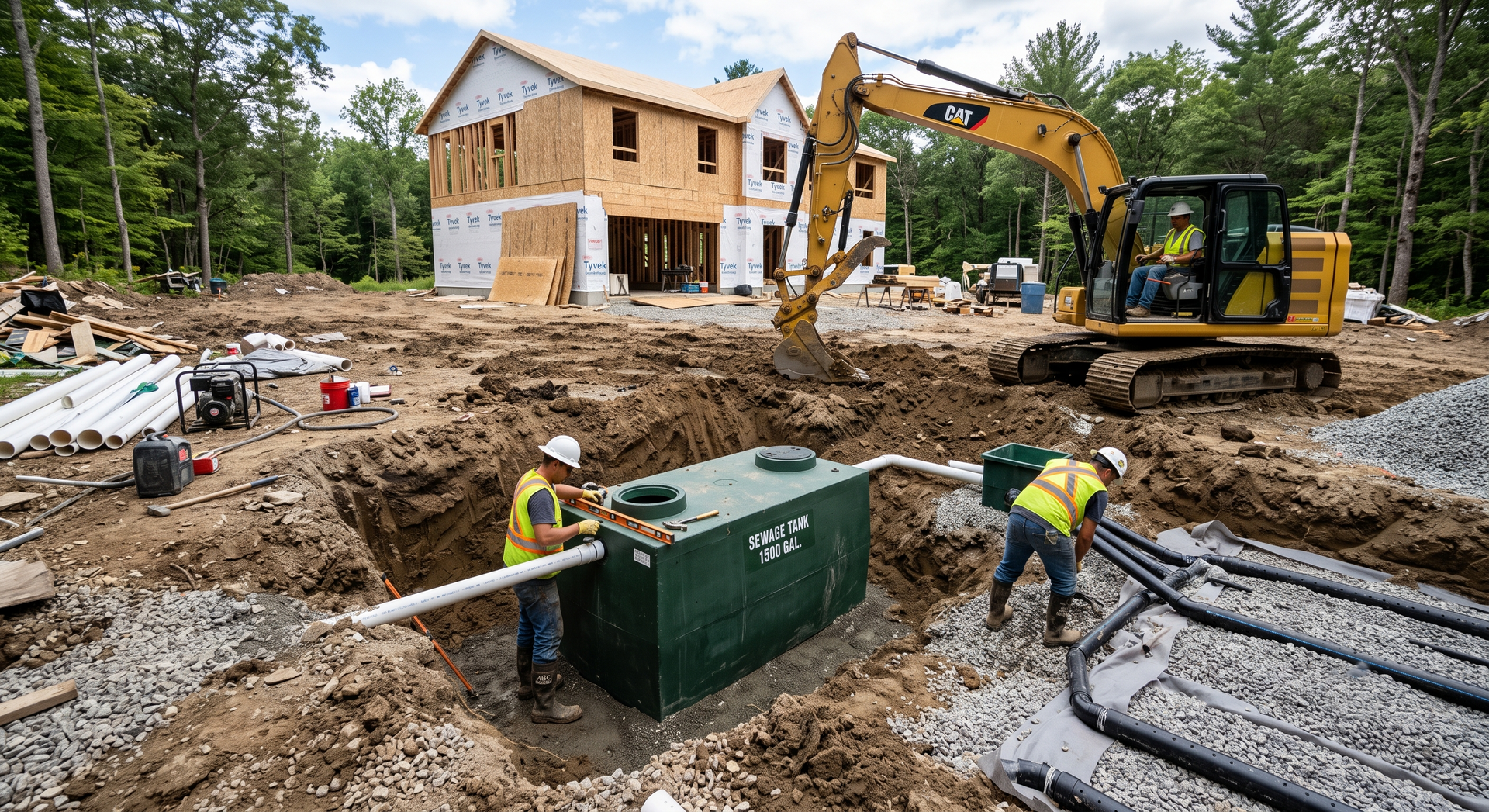
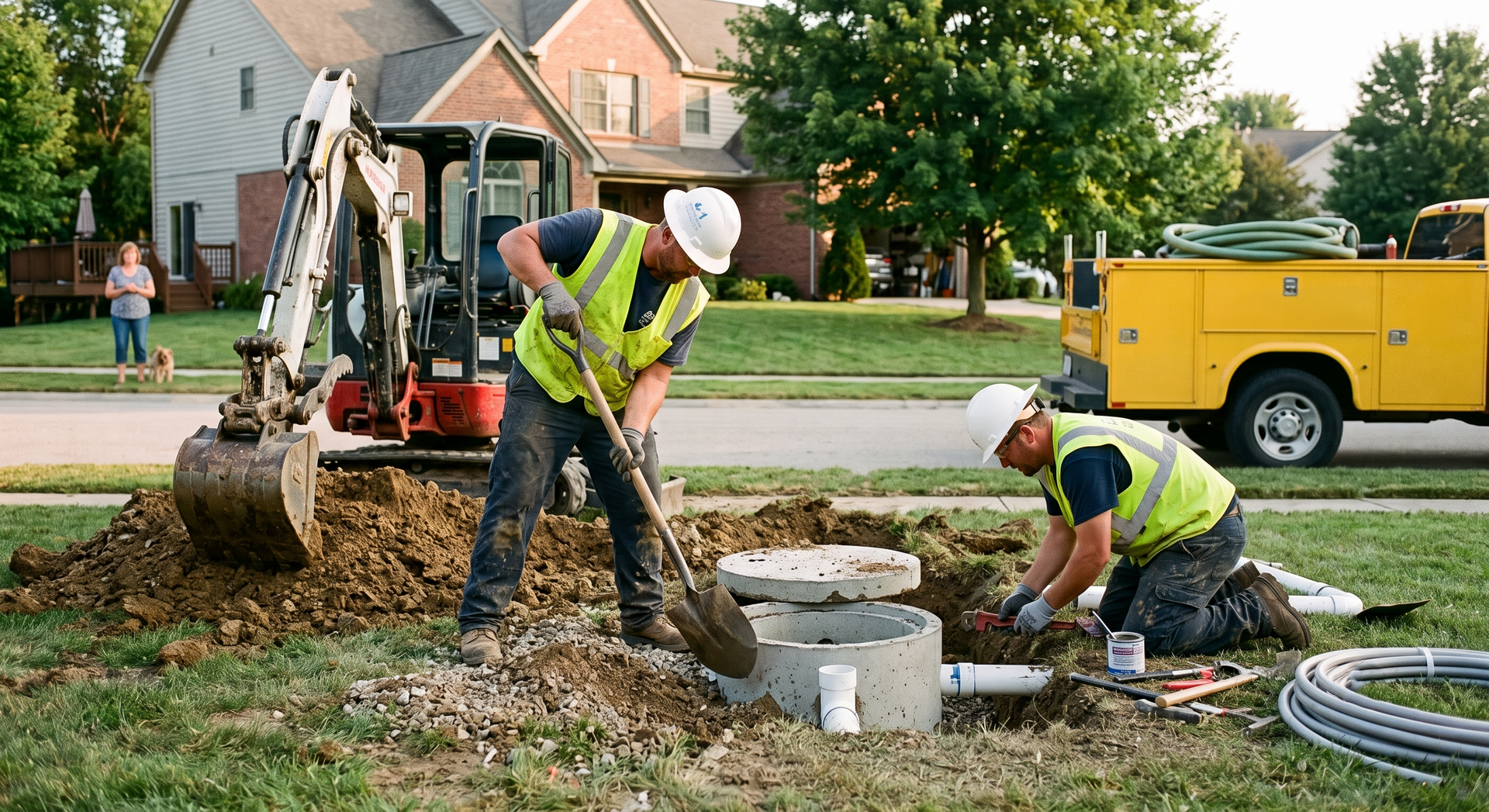
Professional septic system installation and repairs can help determine whether a problem originates in the tank, piping, distribution components, drain field, or surrounding site conditions.
Damaged Distribution Components
Wastewater should be distributed through the drain field as the system was designed to operate. Damaged piping or other distribution components can interfere with that process.
If wastewater becomes concentrated in only part of the field instead of being distributed appropriately, one area may experience greater stress.
Because these components are underground, the exact cause cannot usually be determined from surface symptoms alone.
How Can Soil Conditions Contribute to Failure?
The soil surrounding a drain field is part of the wastewater treatment process. Changes to that soil can affect system performance even when the septic tank itself is functioning.
Compaction From Vehicles and Equipment
Cars, trucks, tractors, trailers, and construction equipment can compact drain field soil.
Compaction reduces pore space within the soil and can restrict the movement of water and air. Heavy loads may also damage buried components.
This risk is particularly relevant on rural properties where an open drain field may appear to be a convenient route to a barn, field, or construction area.
Persistent Soil Saturation
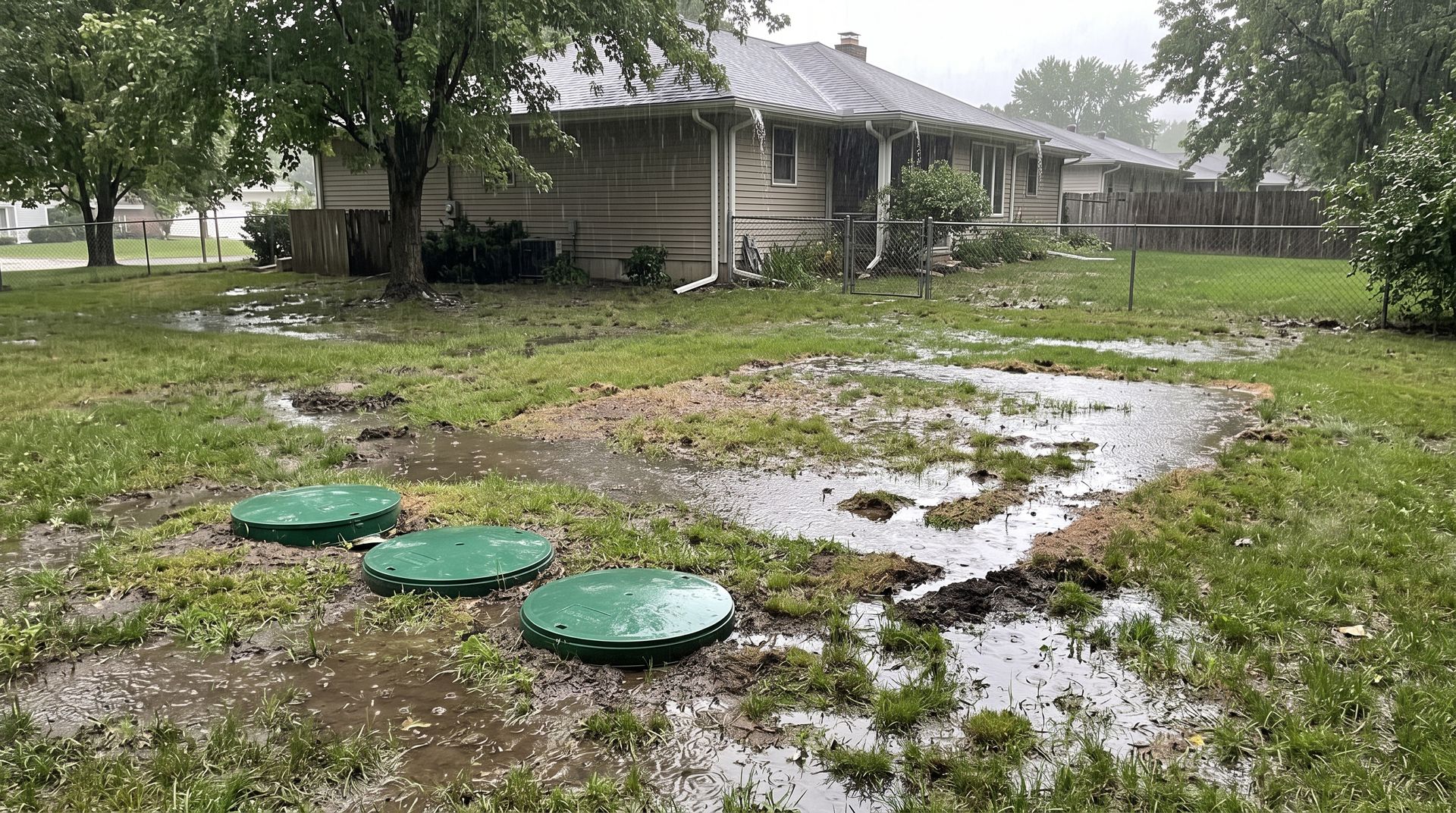
A drain field surrounded by persistently saturated soil has less capacity to accept septic wastewater.
Rainfall can temporarily saturate a property without causing permanent failure. The greater concern is ongoing saturation caused by drainage patterns, low areas, or runoff repeatedly directed toward the septic field.
This distinction matters because correcting a surface-water problem is different from addressing a failed septic component.
Can Landscaping and Construction Damage a Drain Field?
Property improvements can affect septic systems long after their original installation.
Trees and large shrubs planted too close to septic components may create conflicts as roots spread underground. Excavation can damage piping, while new structures or heavy surfaces can interfere with protected septic areas.
Changes to Grading Can Affect Water Movement
A new driveway, building pad, landscaping project, or other grading work can change where stormwater travels.
If those changes direct additional runoff toward the drain field, the soil may remain wetter than before. Professional driveway and drainage services can help address property runoff when grading contributes to excessive water around septic areas.
Homeowners should identify septic locations before beginning major construction or earthwork.
Is a Stressed Drain Field the Same as a Failed Drain Field?
No. Temporary stress and drain field failure are not necessarily the same condition.
For example, unusually heavy rainfall can saturate soil and temporarily slow wastewater absorption. Conditions may improve as the surrounding ground dries.
Persistent sewage odors, recurring wastewater problems, consistently saturated areas, or symptoms that continue under otherwise normal conditions deserve professional evaluation.
Avoid assuming that every wet drain field needs replacement. The underlying cause should guide the solution.
How Can Homeowners Reduce Drain Field Stress?
Homeowners can reduce preventable stress by protecting both the septic system and the surrounding property.
Helpful practices include:
- Repair leaking plumbing fixtures
- Avoid repeated excessive water use
- Keep vehicles and equipment off the drain field
- Keep unsuitable materials out of household drains
- Avoid building over septic areas
- Keep large trees away from buried components
- Prevent unnecessary runoff from flowing toward the field
- Tell contractors where septic components are located
These practices cannot prevent every problem, but they can help avoid unnecessary physical and hydraulic stress.
FAQs About Septic Drain Field Failure
Can a drain field fail even if the septic tank seems fine?
Yes. Problems can involve soil conditions, distribution components, physical damage, or other parts of the system beyond the tank.
Does a wet drain field always mean failure?
No. Rainfall and surface drainage can temporarily create wet conditions. Persistent or recurring symptoms should be professionally evaluated.
Can heavy equipment damage a drain field?
Yes. Heavy equipment can compact the soil and potentially damage underground septic components.
Does every failed drain field need replacement?
Not every suspected problem means the entire drain field requires replacement. The cause and condition of the system should be determined before deciding on corrective work.
Get Help With Septic Drain Field Failure
Concerned about septic drain field failure in Sunbury or Central Ohio? Contact Risha Enterprises for professional septic service.
Recent Posts